
Nyungwe Forest and the Chimps You Are Going to Track
Nyungwe National Park in southwest Rwanda contains one of the oldest and most biodiverse rainforests in Africa -- over 1,000 plant species, 13 primate species, 300 bird species. At its centre is a habituated chimpanzee community of over 60 individuals that has been studied for decades.
Most visitors who have done gorilla trekking in Volcanoes expect something similar at Nyungwe. It is not. Chimpanzees and mountain gorillas are entirely different animals with entirely different social structures, movement patterns, and temperaments. Understanding the difference before you arrive makes the experience significantly richer.
The Fundamental Difference: Chimps Move, Gorillas Stay
Mountain gorillas are terrestrial and slow-moving. They wake up, eat nearby, rest, eat nearby again, build a night nest. A gorilla family rarely moves more than 2 km in a day. When you find them, you stay with them.
Chimpanzees are arboreal, fast, and cover up to 10 km a day. Tracking them through Nyungwe means following sound more than sight -- the crashing in the canopy above you, the screaming that bounces off every tree, the sudden explosion of movement as 20 chimps erupt through the forest at full speed overhead. You are often running.
This is the thing most people do not prepare for: chimpanzee tracking is physically intense. Not because of the terrain -- though Nyungwe is hilly -- but because of the pace. You cannot control where chimps go. You follow or you lose them.
Chimpanzee Social Structure -- Fission-Fusion and What It Means
Gorillas live in stable, closed family groups. The silverback controls the group. Everyone moves together.
Chimpanzees use a fission-fusion social structure: the community breaks into smaller subgroups (parties) that form, dissolve, and reform throughout the day based on food availability, social dynamics, and individual preference. On a given morning you might find 8 chimps. By afternoon they may have joined 30 others at a fruiting tree. By dusk they split again into sleeping groups of 5.
This means two tracking experiences at Nyungwe are never the same. What you encounter depends entirely on what the chimps decided to do that morning.
Chimp Behavior That Will Unsettle You (In the Best Way)
Chimpanzees share 98.7% of human DNA -- exactly the same statistic as gorillas. But where gorillas feel ancient and dignified, chimps feel uncomfortably familiar.
- Tool use: Nyungwe chimps use sticks to extract termites from mounds. Watching a chimp select, modify, and use a tool is the moment evolution becomes visible.
- Political alliances: Male chimps form and maintain political coalitions -- grooming allies, punishing defectors, strategic deception. The dominant male is not always the biggest. He is the most politically skilled. Frans de Waal's research on chimpanzee politics reads like a description of human institutions.
- Hunting: Chimpanzees are hunters. They coordinate cooperative hunts for red colobus monkeys in Nyungwe. If you witness a hunt, it is spectacular and disturbing in equal measure. The chimps are strategic, communicating, cutting off escape routes. It lasts 20 minutes and ends messily.
- Reunion displays: When subgroups reunite, males perform dramatic charging displays -- screaming, swaying, dragging branches. The energy is volcanic. The noise fills the forest. You realize how containable human aggression actually is.
What Your Tracking Hour Actually Looks Like
Nyungwe chimp tracking begins at 5 AM at the park headquarters near Uwinka. Rangers who tracked the chimps' location at dusk the previous evening set out ahead of your group and radio back when they have found the community. You follow a guide through the forest.
When you reach the chimps, the one-hour clock starts. What happens in that hour depends entirely on the chimps. They may be feeding quietly 15 metres above you -- a peaceable, extraordinary scene. Or they may be in full social chaos -- males charging, females screaming, juveniles falling out of trees. Both are extraordinary. Neither is predictable.
Wear muted colours. Closed shoes with good grip. The forest floor is rooted and uneven. You will be moving fast over it.
The Drive to Nyungwe -- Rwanda's Most Beautiful Road
Nyungwe is 225 km from Kigali -- a 4 to 5 hour drive on Rwanda's most scenic road. The route takes you through the tea country of Huye and Nyamagabe, climbing steadily to 2,950 metres before dropping into the forest. On a clear morning, the views over the southern highlands are extraordinary.
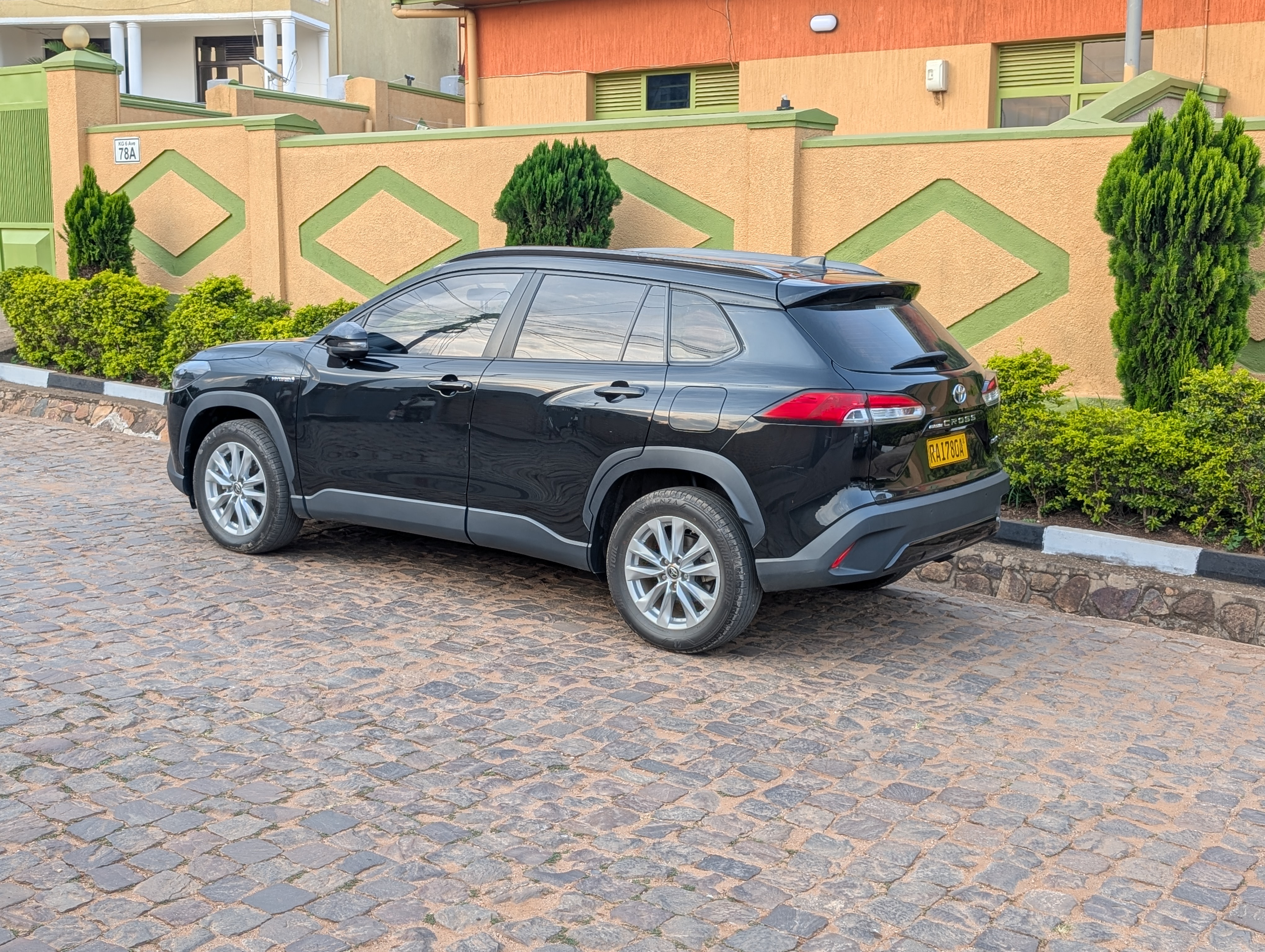
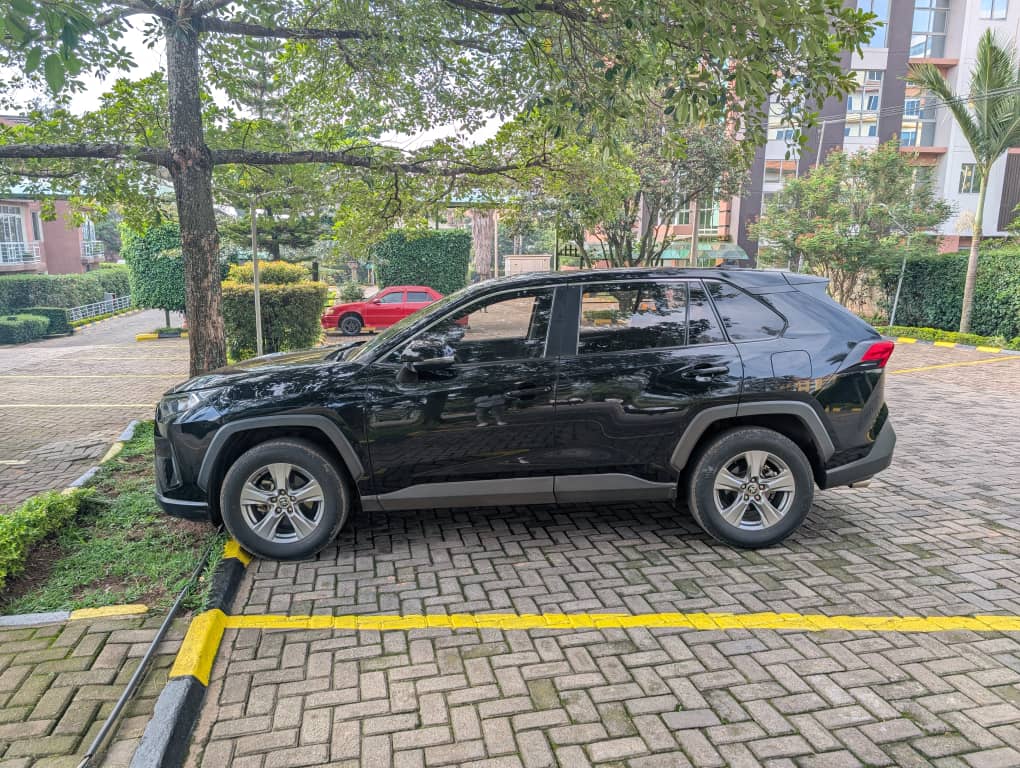
This is a trip that rewards a self-drive. The road passes through tea estate country, across mountain ridges, through villages where the road narrows to a single lane and life happens on both sides of you. No tour bus stops for this. A 4x4 with good clearance handles the mountain sections comfortably year-round. See our full Nyungwe driving guide for the complete route breakdown.
-> Nyungwe Forest car hire and driving guide
-> WhatsApp us: +250 788 362 035
-> Browse our full fleet from $35/day